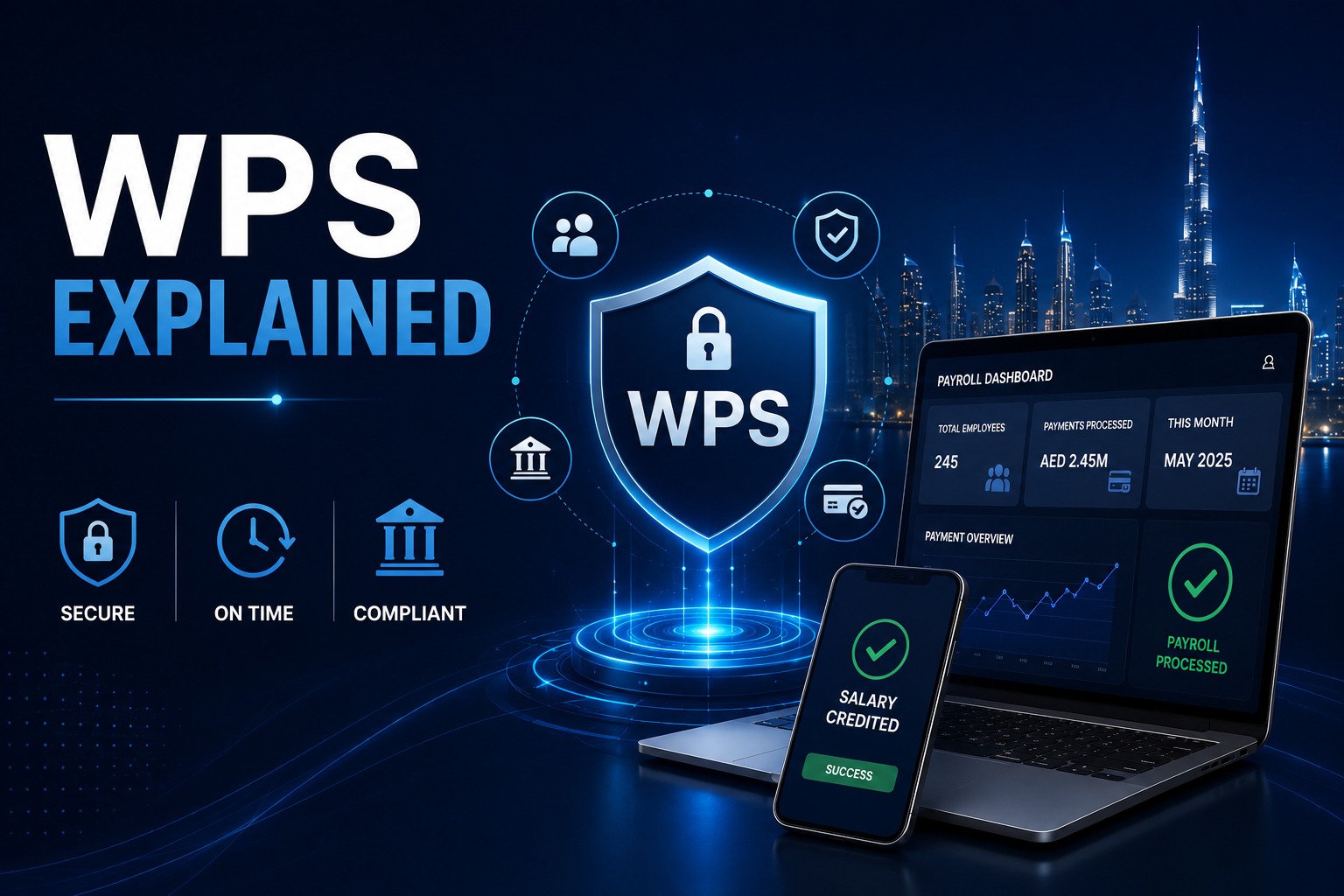
The UAE Wage Protection System (WPS) is a revolutionary electronic salary transfer system introduced by the Ministry of Human Resources and Emiratisation (MOHRE) to ensure timely and full payment of wages to workers across the UAE. If you’re working in the UAE, understanding the WPS is crucial to protecting your rights and ensuring you receive your salary on time.
Need to calculate gratuity? Use our free calculator
What is the UAE Wage Protection System (WPS)?
The Wage Protection System (WPS) is an electronic payment system that monitors and governs the payment of wages to employees in the UAE. Launched in 2009 and continuously updated, the system ensures that employers pay salaries on time through approved financial institutions.
Key Features of WPS:
- Electronic monitoring of all salary payments
- Mandatory for all private sector companies in UAE
- Ensures transparency in wage payments
- Protects workers from salary delays and non-payment
- Integrated with MOHRE systems and banks
How Does the WPS Work?
The Wage Protection System operates through a straightforward electronic process:
- Employer Registration: Companies register with WPS through their bank or exchange house
- Salary Information File (SIF): Employer submits a digital file containing employee salary details
- Bank Transfer: Salaries are transferred electronically through WPS-registered financial institutions
- MOHRE Monitoring: The Ministry receives automatic reports of all salary transfers
- Employee Notification: Workers receive salary via bank account or Wage Card (WPS card)
Latest Updates to UAE WPS in 2026
The UAE government continuously enhances the Wage Protection System to better protect workers. Here are the latest updates:
1. Enhanced Digital Integration with U.AE Platform
The WPS is now fully integrated with the U.AE government services platform, making it easier for employees to:
- Check salary payment status online through U.AE portal
- Download official salary certificates
- File complaints directly if wages are delayed
- Access complete salary payment history
How to access: Visit u.ae and log in with your UAE Pass or Emirates ID.
2. Stricter Penalties for Non-Compliant Employers
MOHRE has introduced tougher sanctions for companies that fail to comply with WPS requirements:
- First Violation: Warning and AED 5,000 fine per affected employee
- Repeated Violations: Work permit suspension, inability to hire new employees
- Severe Cases: Company license suspension or cancellation
- Criminal Charges: Possible legal action for deliberate non-payment
3. Real-Time Salary Tracking
Employees can now track their salary status in real-time through the MOHRE mobile app and U.AE platform, receiving instant notifications when salary is processed.
Who Must Use the Wage Protection System?
WPS is mandatory for:
- All private sector companies in UAE
- Companies in free zones (DIFC, ADGM have separate but similar systems)
- Employers with even a single employee
- All categories of workers (skilled, semi-skilled, and unskilled labor)
Exemptions: Only federal and local government entities are exempt from WPS as they have their own payroll systems.
Types of WPS Payment Methods
Employees receive salaries through WPS via two primary methods:
1. Bank Account Transfer (Most Common)
- Salary deposited directly into employee’s UAE bank account
- Works with all major UAE banks (Emirates NBD, ADCB, FAB, Mashreq, RAKBank, etc.)
- Instant access to funds via ATM, online banking, or debit card
2. WPS Wage Card (For Workers Without Bank Accounts)
- Prepaid card issued by exchange houses or financial institutions
- Can withdraw cash from ATMs across UAE
- No monthly fees for basic wage card services
- Popular providers: UAE Exchange, Al Ansari Exchange, Lulu Exchange
Your Rights Under the WPS System
As an employee in the UAE, the Wage Protection System guarantees you several important rights:
1. Timely Salary Payment
- Employers must pay salaries within 10 days of the agreed payment date in your contract
- Typical payment date: Last day of the month or first few days of next month
- Late payment beyond 10 days = automatic violation logged with MOHRE
2. Full Salary Payment (No Deductions Without Consent)
- You must receive the full salary amount stated in your labor contract
- Unauthorized deductions are illegal
- Permitted deductions: loan repayments (with written agreement), court orders, accommodation (if specified in contract)
3. Right to Salary Certificate
- You can download official salary certificates from U.AE or MOHRE portal
- Needed for: bank loans, credit cards, visa applications, rental agreements
- Certificate shows: employer name, salary amount, payment dates, WPS compliance status
What to Do If Your Salary is Delayed or Not Paid
If your employer fails to pay your salary through WPS on time, follow these steps:
Step 1: Check Your WPS Payment Status
- Visit U.AE platform
- Log in with UAE Pass or Emirates ID
- Navigate to: MOHRE Services → Wage Protection System → Check Salary Status
- Verify if payment was processed but not received, or not processed at all
Step 2: Communicate With Your Employer
- Email or formally notify HR department about delayed salary
- Keep written records of all communications
- Ask for specific date when payment will be processed
Step 3: File Official Complaint with MOHRE
If salary remains unpaid after 10 days from due date:
- Online: File complaint via U.AE → MOHRE → Labour Complaints
- Phone: Call MOHRE toll-free hotline 600 590000 (24/7)
- In Person: Visit nearest MOHRE office with Emirates ID and labor contract
- Required documents: Copy of labor contract, Emirates ID, bank statement showing no salary deposit
Step 4: Legal Action (If Necessary)
If MOHRE mediation fails:
- File case with UAE Labour Court
- Court filing is free for labor disputes
- Bring: labor contract, salary slips, WPS records from U.AE, communication with employer
- Courts typically rule in favor of employees with clear WPS evidence
How Employers Benefit from WPS Compliance
For employers, maintaining WPS compliance offers significant advantages:
- Smooth Work Permit Processing: New work permits approved faster
- Company Reputation: WPS compliance status visible to potential employees and business partners
- Avoid Penalties: No fines, permit suspensions, or legal issues
- Employee Satisfaction: On-time salary payment improves morale and retention
- Government Tender Eligibility: WPS compliance required for government contracts
Common WPS Questions Answered
1. Can my employer pay me in cash instead of WPS?
No. All private sector employers in UAE must pay salaries through WPS. Cash payments are illegal and unprotected. If your employer insists on cash, report to MOHRE immediately.
2. What if I don’t have a UAE bank account?
Your employer must provide you with a WPS Wage Card from an approved exchange house. This card functions like a debit card and allows you to withdraw your salary from ATMs.
3. Does WPS cover overtime and bonuses?
Yes, WPS should include all salary components: basic salary, allowances, overtime, and bonuses. The Salary Information File (SIF) submitted by employer must list all components separately.
4. How long does MOHRE take to resolve salary complaints?
Initial investigation: 3-7 working days. MOHRE will contact your employer immediately. Most cases resolve within 2-4 weeks through mediation. Complex cases may take longer or go to labor court.
5. Will filing a WPS complaint affect my job?
UAE law prohibits retaliation against employees who file legitimate salary complaints. If your employer terminates you or takes negative action after filing complaint, report this to MOHRE – it’s a serious violation with heavy penalties.
How to Check WPS Status Online via U.AE
Follow these steps to check your salary payment status:
- Visit https://u.ae
- Click “Login” → Select “UAE Pass” or “Emirates ID”
- Navigate to: Services → MOHRE → Wage Protection System
- Select: “Salary Payment Inquiry“
- View: Payment dates, amounts, employer compliance status
- Download: Official salary certificate if needed
Pro Tip: Enable SMS notifications on U.AE to receive alerts when your salary is processed through WPS.
WPS and End-of-Service Gratuity
The Wage Protection System also helps ensure proper calculation and payment of your end-of-service gratuity:
- WPS records provide official proof of your basic salary (used for gratuity calculation)
- Payment history shows continuous service duration
- WPS data is admissible evidence in gratuity disputes
- Employers cannot claim you were paid differently than WPS records show
Related: Use our free UAE Gratuity Calculator to estimate your end-of-service benefits based on your WPS salary records.
Key Takeaways: UAE Wage Protection System
- WPS is mandatory for all private sector employers in UAE
- Salary must be paid within 10 days of the agreed date
- Check payment status online via U.AE platform
- File complaint immediately if salary is delayed beyond 10 days
- Call MOHRE hotline 600 590000 for assistance 24/7
- Employer retaliation is illegal – report it to MOHRE
- Keep WPS records for gratuity calculation and legal purposes
Conclusion: WPS Protects Your Rights
The UAE Wage Protection System is one of the most advanced salary monitoring systems in the world, designed to protect workers from salary delays and non-payment. With the integration of U.AE platform and enhanced MOHRE enforcement, employees now have stronger tools than ever to ensure they receive their rightful wages on time.
If you’re working in the UAE, familiarize yourself with WPS, regularly check your payment status online, and don’t hesitate to report violations. Your salary is your right, and UAE law is firmly on your side.
Need Help?
- 📞 MOHRE Hotline: 600 590000 (24/7, toll-free within UAE)
- 🌐 U.AE Portal: u.ae
- 🧮 Calculate Your Gratuity: Free UAE Gratuity Calculator
- 📚 Learn Labour Law: Complete UAE Labour Law Guide
Last Updated: May 2026 | Information based on Federal Decree-Law No. 33 of 2021 and MOHRE regulations